How to Stop Nail Biting Without Hiding Your Hands
That quick bite while answering emails, sitting in traffic, or watching a show can feel automatic. If you want to stop nail biting, the goal is not to suddenly have perfect willpower. It is to notice what the habit is doing for you, then give your hands and mind a better option. With a little strategy and consistent nail care, healthier, polished hands are absolutely within reach.
Nail biting is common, and it is rarely about not caring about your appearance. For many people, it is a response to stress, boredom, concentration, or the urge to fix one tiny rough edge. The problem is that biting often creates the very unevenness that triggers the next bite. Breaking that cycle starts with compassion, not criticism.
Why Nail Biting Is So Hard to Quit
Nail biting, also called onychophagia, is often an automatic body-focused habit. You may not decide to do it at all. Your fingers simply reach your mouth while your attention is somewhere else.
For some people, the habit creates a brief sense of relief during a tense moment. For others, it is about texture: a snag, chipped polish, or uneven corner feels impossible to leave alone. That is why telling yourself to “just stop” usually falls flat. A better plan accounts for your personal trigger and makes the alternative easier to choose.
There is also a physical loop. Biting leaves nails short, ragged, and tender. Dry cuticles may peel, and a torn hangnail can become another thing to pick. When your nails feel rough, your brain gets a fresh cue to bite or pull at them again.
Start by Finding Your Trigger Pattern
You do not need to track every moment of the day. For one week, simply pause when you catch yourself biting and ask what is happening around you. Are you scrolling? Working against a deadline? Feeling anxious before bed? Trying to focus during class or a meeting?
A small note in your phone can reveal a pattern quickly. You may notice that your hands are most vulnerable during television time, long commutes, or while reading. Once you know the setting, you can prepare a replacement before the habit begins.
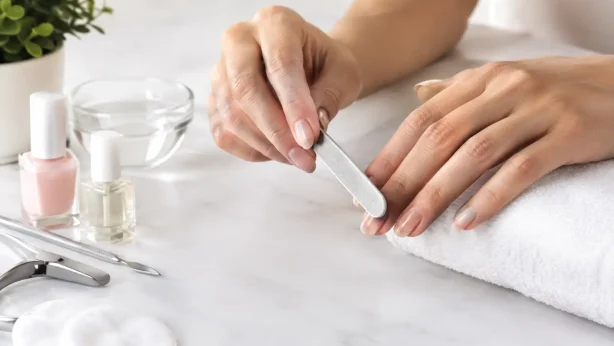
It also helps to identify your texture triggers. If one chipped corner sends you into a picking spiral, carry a fine nail file. Smooth the edge instead of biting it. If dry skin is the issue, keep cuticle oil or hand cream nearby. This is not about making your routine complicated. It is about removing the tiny irritations that invite your hands to your mouth.
Make Nail Biting Less Convenient
A little friction can be surprisingly effective. Bitter-tasting nail treatments work well for some people because they interrupt the automatic moment before a bite. They are not everyone’s favorite, especially if you use your hands around food or have sensitive skin, but they can be a useful short-term reminder.
Physical barriers can help, too. A fresh manicure, breathable bandages on especially tempting fingers, or even a pair of cotton gloves at home can create a pause. The pause matters. It gives you a chance to choose something else before the behavior runs on autopilot.
Keep your nails at a length that feels manageable. If longer nails catch easily or make you nervous, there is no rule that says your goal must be dramatic length. A short, neatly shaped manicure can look incredibly refined and may feel more realistic while you are rebuilding the habit.
Replace the Habit, Do Not Just Remove It
Your hands still need something to do during the moments when you usually bite. Choose an option that fits your trigger rather than forcing a one-size-fits-all solution.
If anxiety is the driver, try slow breathing while pressing your fingertips together, holding a stress ball, or rubbing a smooth ring. If boredom is the issue, keep a small fidget item near the couch, in your car, or at your desk. If you bite while concentrating, a mint, gum, or sip of water can give your mouth another job.
The replacement does not have to be glamorous. It just needs to be available at the right time. Keep it where the habit happens. A stress ball in a drawer across the room will not help much during a meeting, but one tucked beside your laptop might.
Use a Manicure as Motivation to Stop Nail Biting
A polished set can be more than a pretty finish. It can make you more aware of your hands and give you a reason to protect the progress you are making. Seeing a glossy neutral, a soft pink, or a fierce seasonal color can turn nail care into a small daily reminder: these hands deserve care.
The best service depends on your nail condition and lifestyle. A traditional manicure is a lovely choice when nails are growing out and you want regular shaping, cuticle care, and color. Gel polish can offer a longer-wearing finish with less opportunity to pick at chipped color. If your natural nails are fragile or very short, builder gel may provide added structure while they grow.
Extensions such as Gel-X, acrylic, dip powder, or hybrid gel can also make biting more difficult for some clients because the surface is thicker and smoother. But they are not a magic fix. If you are determined to bite or pick, you can still damage both the enhancement and your natural nail underneath. The healthiest approach is a service selected for your current nail condition, maintained professionally, and never peeled off at home.
At Elodie Nail Lounge, a thoughtful consultation can help you choose a clean, polished look that supports your goals without pushing your nails beyond what they are ready for. Sometimes the most luxurious choice is a short, strong set with meticulous cuticle care and a color you cannot stop looking at.
Protect the New Growth Between Appointments
Consistency matters more than perfection. Apply cuticle oil once or twice daily, especially after washing your hands. Hydrated cuticles are less likely to split and tempt you to pick. Follow with hand cream to keep the skin around your nails comfortable and smooth.
Avoid using your nails as tools for opening cans, scratching labels, or prying apart packaging. Those small jobs can cause lifting, breaks, and rough edges. Keep a file nearby and use it gently in one direction when you spot a snag.
If you wear gel or enhancements, schedule maintenance before lifting becomes obvious. Trying to pull off product yourself can thin and weaken the nail plate, making your recovery feel longer. Professional removal and regular fills protect the progress you have worked for.
Expect Slips and Keep Going
Most people do not stop nail biting in a straight line. You may have a stressful week and bite one nail after weeks of progress. That does not erase the healthy growth on the other nine fingers, and it does not mean your plan failed.
Instead of criticizing yourself, get practical. File the damaged edge, moisturize the area, and ask what made that moment harder. Maybe you ran out of cuticle oil. Maybe your manicure had grown out. Maybe you were under more pressure than usual. Adjust the system, then continue.
Taking photos every week can make progress easier to see. Nails grow gradually, so day-to-day changes are easy to miss. A simple before-and-after comparison often delivers the encouragement that willpower alone cannot.
When Extra Support Is a Good Idea
If biting causes bleeding, swelling, pain, signs of infection, or damage that will not heal, contact a medical professional. You should also consider talking with a doctor or mental health professional if the urge feels intense, difficult to control, or connected to anxiety, obsessive thoughts, or distress. Habit-focused therapy can be especially helpful, and asking for support is a strong next step.
Your hands are part of how you move through every day – working, caring for others, celebrating, and showing up for yourself. Give them the same attention you would give any favorite self-care ritual. One smooth edge, one hydrated cuticle, and one fresh set at a time, you can build a routine that makes biting feel less necessary and beautiful nails feel like your new normal.