Best Nail Shapes for Typing Without the Click-Clack
A beautiful manicure should fit into your real life, not make every email, group chat, or spreadsheet feel like a balancing act. The best nail shapes for typing let you keep a polished, fresh-set look while your fingertips can still reach the keys comfortably. For many clients, the sweet spot is not about having the shortest nails possible. It is about choosing a shape, length, and enhancement system that feel intentional for your routine.
If you type all day at an office, study between classes, answer messages while managing family life, or work from home, your nails take on a lot of tiny repetitive impact. A thoughtful shape reduces tapping, snagging, pressure at the nail tip, and the temptation to type with the pads of your fingers in an awkward position. Better yet, it can still give you the soft glam or fierce energy you want from a salon visit.
Best Nail Shapes for Typing: The Short Answer
Short oval, squoval, and short almond are usually the most comfortable nail shapes for frequent typing. They have rounded or softened edges that are less likely to catch on keys, and they look refined at practical lengths. The right choice depends on your natural nail bed, your preferred level of drama, and whether you wear natural nails, dip powder, builder gel, Gel-X, acrylic, or another enhancement.
For a low-maintenance manicure, a short squoval is hard to beat. For a slightly more elevated look, choose a short oval. If you love a slimmer silhouette and are willing to keep the length controlled, short almond can be surprisingly keyboard-friendly. Long coffin, stiletto, and sharply squared nails can absolutely be worn by people who type, but they demand more adaptation and may not feel effortless during a full workday.
Why Nail Shape Matters at the Keyboard
Typing comfort is mostly about where your nail lands. With a longer or sharper tip, the nail may hit the key before the pad of your finger does. That changes your hand angle and can create the familiar click-clack sound, slower typing, and occasional missed keys. It may also put repeated force on the free edge, especially if your nails are thin, flexible, or already prone to lifting.
Shape matters because it determines how much nail extends beyond the fingertip and how likely the corners are to catch. A square nail with defined corners has more surface area near the edges. A rounded nail allows your fingers to move more naturally across a keyboard. This is why a modest adjustment in shape often makes a bigger difference than changing color, product, or nail art.
Length remains equally important. Even the most graceful almond shape can interfere with typing when it is very long. As a starting point, ask for a free edge that extends just a little past your fingertip. This gives your manicure enough presence for color, chrome, French details, or a clean neutral without changing the way you use your hands.
The Most Typing-Friendly Shapes
Short squoval: the everyday favorite
Squoval combines the clean look of a square nail with gently rounded corners. It is one of the most practical choices for busy professionals, parents, students, and anyone who spends hours on a laptop. It keeps a tidy, modern profile while removing the sharp corners that can catch on keys, zippers, and hair.
This shape works beautifully with regular gel manicures, builder gel overlays, and dipping powder. It also gives nail art a nice canvas, from a micro French tip to a glossy solid color. If your natural nails are wider, squoval can feel balanced and flattering without requiring extra length.
Short oval: soft, polished, and comfortable
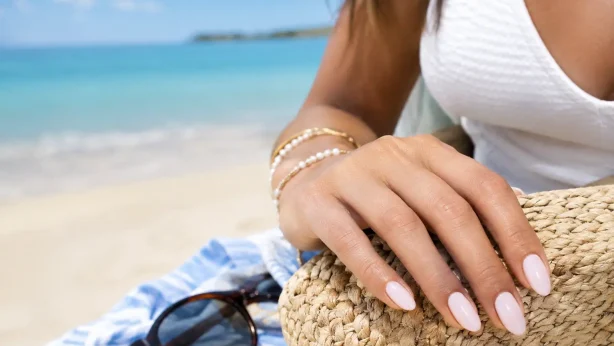
Oval nails follow the curve of the fingertip, so they tend to feel natural while typing. There are no corners to tap against a key, and the silhouette is elegant without being overly dramatic. A short oval is an especially lovely option for clients who want their hands to look elongated but prefer a more understated manicure.
Choose oval if you wear neutrals, sheer pinks, rich reds, or delicate seasonal designs and want a shape that feels timeless. It also pairs well with builder gel when you need support for natural nails that bend or peel. The key is keeping the length sensible. At a short-to-medium length, oval is easygoing; at a long length, it can still start to affect your typing angle.
Short almond: elevated without going overboard
Almond nails taper gently toward a rounded tip. When kept short, they offer a refined, lengthening effect that makes fingers appear more slender. They are a favorite for clients who want a little more fashion-forward energy than oval or squoval, especially for events, date nights, bridal moments, or a simple set that still feels special.
The trade-off is that almond requires enough length to create its tapered shape. If the nail is too short, it may look more oval than almond. A skilled technician can create a soft short almond that stays wearable, but be clear that typing comfort is your priority. A subtle taper is usually more practical than a pronounced point.
Round: practical, especially for very short nails
Round nails are shaped to mirror the natural curve of the fingertip. They are excellent for very short natural nails and clients who want the least possible interference at a keyboard. This is not a boring choice. A clean round shape with a glossy finish, cat-eye effect, minimalist art, or a rich seasonal color can look incredibly polished.
Round nails are also a smart reset shape if you are growing out damage or transitioning from long extensions. The shorter profile can help you return to comfortable typing while you build strength and length gradually.
Shapes That Can Be Harder for Heavy Typers
Long square and coffin nails are beautiful, but their width and length can make them more likely to strike keys. The issue is not that they are impossible to type with. Many experienced nail wearers adapt their technique. Still, if you are constantly typing under a deadline, the added length can feel less convenient than it looks.
Stiletto and very pointed almond nails create an even more noticeable adjustment. Their tips may press against keys first, and the narrow point can be vulnerable to breaks if you use your hands aggressively. These shapes are perfect when your priority is a bold occasion look, but they are rarely the easiest answer for someone handling a keyboard all day.
Long ballerina shapes have a similar consideration. The flat tip adds visual drama and leaves room for detailed art, but it can change how your fingers meet the keyboard. If you love this silhouette, consider a medium length rather than extra-long extensions, or save it for a period when your schedule is lighter on typing.
Product Choices That Help Your Manicure Hold Up
The best shape needs the right support underneath it. Frequent typing creates small, repeated impacts, so thin or fragile nails may benefit from a strength-focused service. Builder gel can provide a structured overlay that helps natural nails stay protected while maintaining a short oval, squoval, or almond shape. Dip powder can offer a durable feel for clients who want a bit more reinforcement.
Gel-X and acrylic extensions can also work for typists when the length is customized honestly. You do not need to choose extra-long extensions just because you are choosing an enhancement. A short or medium extension can deliver a uniform shape, extra strength, and a polished finish while remaining comfortable for daily tasks.
Sanitation and prep matter here, too. Proper cuticle care, nail preparation, and product application help reduce lifting and breakage, which is especially valuable when your hands are constantly in motion. At Elodie Nail Lounge, a technician can help match the service to your lifestyle rather than steering you toward a one-size-fits-all set.
How to Ask for a Typing-Friendly Set
Tell your technician how you use your hands before the shaping begins. Mention if you work at a computer, play piano, text frequently, care for young children, wear contacts, or need to handle small items. Those details help determine whether a short squoval, oval, or soft almond will serve you best.
Be specific about length as well. Saying short can mean different things to different people, so show where you want the nail to end relative to your fingertip. If you are trying a new shape, start a touch shorter than you think you need. You can always add length at a later appointment once you know how it feels through a regular week.
A practical test is simple: gently mimic your typing position before you leave the salon. Your fingertips should be able to meet an imaginary keyboard without the nails feeling like they lead the movement. If a corner feels too sharp or a tip seems longer than expected, a small filing adjustment can make a major difference.
Your hands do a lot for you. Give them a manicure that brings the color, shine, and confidence, then lets you get back to your day without a second thought.